
Last Updated On:
January 3, 2026
Fertilizer can burn or damage grass if it’s applied incorrectly, used at the wrong rate, or timed poorly. Fertilizer burn happens when grass absorbs more nutrients, especially nitrogen, than it can safely handle, leading to dehydration, discoloration, and in severe cases, dead patches of turf. The good news is that fertilizer damage is usually preventable and often reversible when you understand how fertilization works and how mistakes happen.
Knowing what causes fertilizer burn makes it much easier to avoid and helps you fertilize your lawn with confidence instead of concern.
Fertilizer burn is not a chemical “burn” in the traditional sense. Instead, it’s a form of stress caused by excess salts in the soil. Most fertilizers contain salts that help deliver nutrients to plants. When too much fertilizer is applied, those salts draw moisture out of grass roots rather than supplying them with nutrients.
As moisture is pulled away from the plant, grass blades begin to dry out. This dehydration leads to yellowing, browning, and crispy patches that can look similar to drought stress or disease. In mild cases, the damage is temporary. In severe cases, grass may die if roots are damaged beyond recovery.
Grass needs nutrients, but it also needs balance. When fertilizer is applied at rates higher than recommended, grass absorbs more nitrogen and salts than it can process safely. Instead of promoting growth, this overload overwhelms the plant.
Excess nitrogen forces rapid top growth that the root system cannot support. At the same time, salt buildup interferes with water uptake, leaving grass stressed even when soil moisture is present. This combination of fast growth and dehydration is what causes visible fertilizer burn.
Damage is more likely when fertilizer is applied unevenly, creating concentrated areas of nutrients that affect some parts of the lawn more than others.
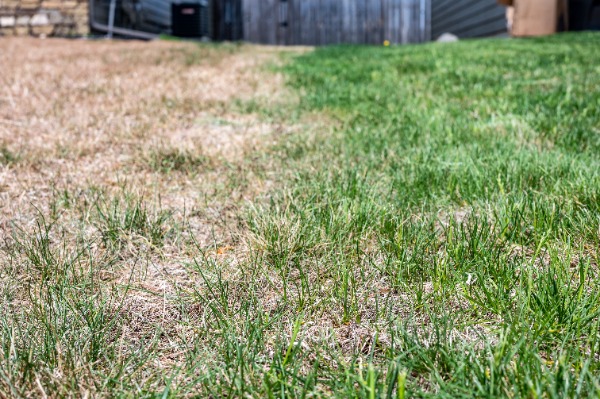
Fertilizer damage doesn’t always appear immediately. In many cases, symptoms show up within a few days after application, especially during warm or dry weather. The appearance of fertilizer burn can vary depending on severity and grass type.
Common signs include patches of yellow or brown grass that follow the pattern of fertilizer application. These areas may feel dry or brittle to the touch. In severe cases, grass blades stop growing entirely and turn straw-like in appearance. The key distinction between fertilizer burn and other lawn problems is the timing. If damage appears shortly after fertilization, fertilizer burn is a strong possibility.
Warning signs of fertilizer burn:
Fertilizer damage is far more likely under certain conditions. Applying fertilizer during periods of stress increases the chance of burning grass, even when using standard products.
Hot weather is a major risk factor. High temperatures increase evaporation and reduce the lawn’s ability to recover from nutrient stress. Dry soil also plays a role, as fertilizer salts become more concentrated when moisture is limited.
Improper timing during the grass’s growth cycle can also contribute. Fertilizing when grass is dormant or struggling makes it harder for the lawn to use nutrients effectively.
Not all fertilizers carry the same risk of burning grass. Fast-release fertilizers deliver nutrients quickly, which can be beneficial for rapid green-up but also increases the chance of overloading grass.
Slow-release fertilizers release nutrients gradually over time, reducing stress and lowering the risk of burn. These products are generally safer for homeowners and provide more consistent results. Liquid fertilizers can also cause burn if applied too heavily or unevenly, but they are easier to control when applied correctly. Granular fertilizers tend to cause more visible burn patterns if spread unevenly.
In many cases, fertilizer burn can be corrected, especially if the damage is mild. The first step is watering the lawn deeply to flush excess salts out of the roots. This helps dilute the fertilizer concentration and restore moisture balance.
Grass that is yellow or lightly browned often recovers within a few weeks once conditions improve. Continued proper watering and mowing at the correct height support recovery. Severely burned areas may not recover on their own and could require overseeding or resodding. However, even serious damage can often be repaired with proper care and time.
Preventing fertilizer burn comes down to following best practices rather than avoiding fertilizer altogether. Using the correct amount, spreading it evenly, and timing applications appropriately dramatically reduces risk.
Reading product labels carefully is essential. Fertilizer rates are based on square footage, and applying more does not produce better results. In fact, it usually leads to the opposite outcome. Watering after fertilization helps nutrients move into the soil and prevents salts from sitting on grass blades, where they can cause direct tissue damage.
Professional lawn care programs are designed to minimize the risk of fertilizer damage while maximizing benefits. Professionals calculate application rates based on lawn size, grass type, and seasonal needs, removing much of the guesswork.
Many professional services use slow-release products and carefully timed applications that align with natural growth cycles. This approach supports steady growth instead of sudden surges that stress grass. Professionals also recognize early signs of stress and adjust fertilization accordingly, reducing the chance of accidental damage.
Q: Can fertilizer kill grass permanently?
A: Yes, severe overapplication can kill grass, but most damage is mild and recoverable.
Q: How soon does fertilizer burn appear?
A: Symptoms often appear within a few days of application.
Q: Does watering after fertilizing prevent burn?
A: Yes, proper watering helps nutrients move into the soil and reduces salt concentration.
Q: Is organic fertilizer safer than synthetic fertilizer?
A: Organic fertilizers are generally slower-release and less likely to burn, but overuse can still cause damage.
Q: Can fertilizer burn happen in cool weather?
A: It’s less common but still possible, especially with heavy applications.
Q: Should I fertilize again if my lawn looks burned?
A: No, wait until the lawn recovers and soil conditions stabilize.


If you are looking for a reliable lawn care company in Lafayette & Baton Rouge, then look no further. Brothers Lawn Service & Landscaping is your full-service lawn care expert and we promise a 100% satisfaction guaranteed! We ensure the quality of our service by providing personal attention to each and every lawn.