
Last Updated On:
February 14, 2026
Sloped landscapes and drainage-prone areas present unique challenges that standard mulching practices don’t always solve. On hillsides, around swales, or near drainage paths, mulch needs to stay in place, manage water flow, and protect the soil beneath it. Premium bark mulch is the best choice for overall drainage issues in a yard, while shredded cedar mulch is an excellent choice for sloped areas.
Gravity and moving water work against mulch on slopes. When the wrong material is used, mulch can wash downhill, expose soil, and clog drains or hardscape areas. In drainage zones, lightweight mulches may float away, leaving plant roots vulnerable and soil unprotected. Selecting mulch specifically suited for slopes and drainage areas reduces maintenance and improves landscape durability. The right mulch helps:
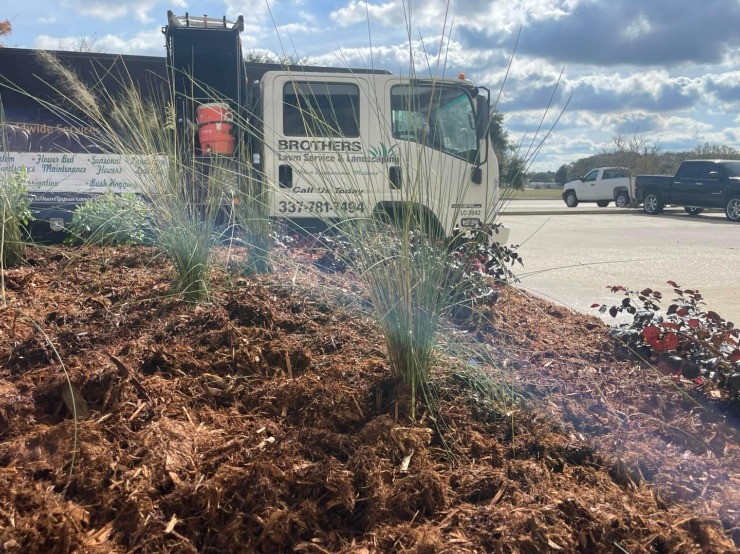
Not all mulch types perform the same under challenging conditions. Some materials are heavier, interlock better, or absorb water more effectively, making them better suited for slopes and drainage areas.
The most effective mulch options include:
When mulch isn’t designed for sloped or high-water areas, problems often appear quickly, sometimes after just one storm. Even a well-installed bed can fail if the material can’t withstand water movement. These early signs usually indicate that the mulch is too light or breaks down too quickly for the conditions. Common short-term issues include:
Over time, using the wrong mulch on slopes can lead to more serious landscape issues. As soil erodes, plant roots become exposed, drainage patterns worsen, and re-mulching becomes a constant chore. Choosing the right mulch from the start helps avoid these issues and keeps slopes stable year after year.
Long-term consequences may include:
Some mulches are better suited for flat garden beds and decorative areas but perform poorly on slopes or in drainage zones. Lightweight or finely textured mulches tend to move easily with water. Mulches that often cause problems on slopes include:
In some cases, mulch issues can be corrected without starting over. Adding heavier mulch on top, improving edging, or reshaping the slope to slow water movement can improve results. However, if mulch consistently washes away, replacing it with a more suitable material is often the most effective solution. Gradual improvements and proper material selection usually outperform temporary fixes.
Q: What is the best mulch for steep slopes?
A: Shredded hardwood or double-shredded bark mulch is often the best choice for steep slopes because the fibers interlock and resist washing during heavy rain.
Q: How thick should mulch be on a slope?
A: A depth of about 2 to 3 inches is ideal. Thicker layers can become unstable and more likely to slide or wash away.
Q: Can mulch help with drainage problems?
A: Mulch can help slow runoff and reduce erosion, but it won’t fix serious drainage issues on its own. Proper grading and drainage solutions may be needed alongside mulching.
Q: Is stone or gravel better than mulch for slopes?
A: Stone can work in some drainage applications, but it can also shift, create heat buildup, and be difficult to maintain. Mulch is often better for planted areas because it improves soil health.
Q: Do I need landscape fabric under mulch on a slope?
A: Landscape fabric can help in some situations, especially on steeper slopes, but it must be installed correctly to avoid water pooling or exposed fabric.
Q: How often should mulch on slopes be replaced?
A: Mulch on slopes may need refreshing more often than flat areas, but using the right material can extend its lifespan and reduce how often it needs replacement.


If you are looking for a reliable lawn care company in Lafayette & Baton Rouge, then look no further. Brothers Lawn Service & Landscaping is your full-service lawn care expert and we promise a 100% satisfaction guaranteed! We ensure the quality of our service by providing personal attention to each and every lawn.